Cycling in Yorkshire & Beyond

Cycling in Yorkshire & Beyond
Stage 19 | Stage 20 | Stage 21
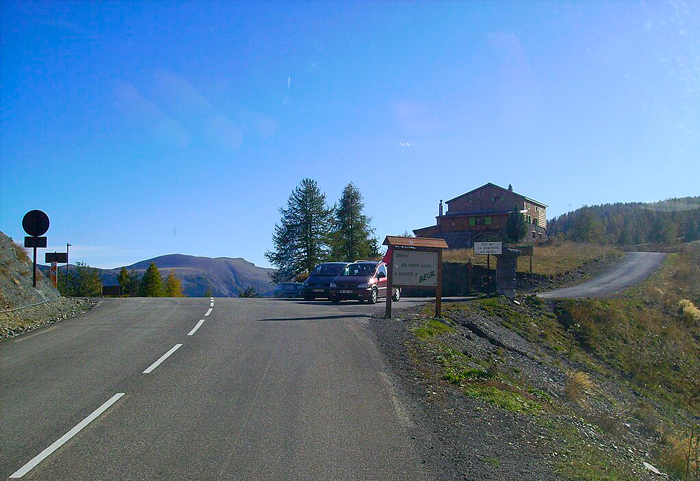
Stage 20 of the Tour de France 2024 is a 132.8km mountain stage.
It starts in Nice, and there's hardly any warm-up before the climbs start. There are four of them - Col de Braus, Col de Turini, Col de la Colmiane and Col de la Couillole.
The top of Col de la Couillole (1,678m) is also the finish line.
There's 4,600m of climbing in total today.
These are video highlights of Stage 20.
This is the Stage 20 blog/race report.
Race Details | Poll | Map & Profile | Timings | Videos | Food & Drink | Route Notes | Favourites
| Date | Sunday 20th July 2024 |
|---|---|
| Stage classification | Mountain |
| Distance | 132.8km |
| Intermediate sprint | Saint-Martin-Vésubie |
| Climbs | Col de Braus (Cat. 2) Col de Turini (Cat. 1) Col de la Colmiane (Cat. 1) Col de la Couillole (Cat. 1) |
| Total climbing | 4,600m |
Vote for one of the main contenders to win Stage 20.
This is a map of the route of Stage 20, Tour de France 2024.
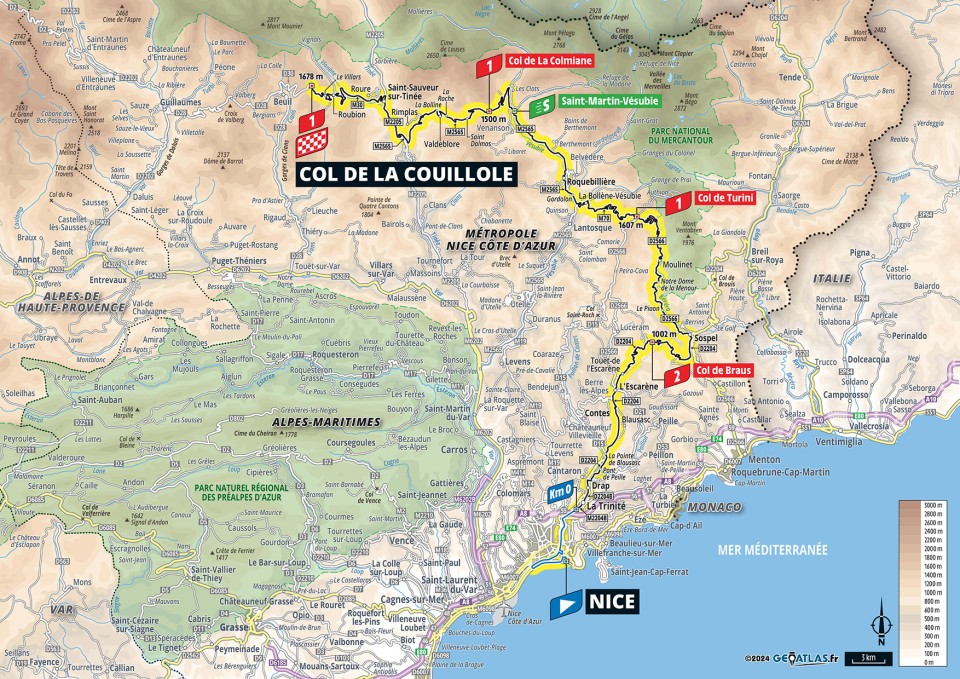
This is a zoom-able map of the route of Stage 20 of the 2024 Tour de France.
Note: this routemap was produced a long time in advance of the race, and could be subject to changes.
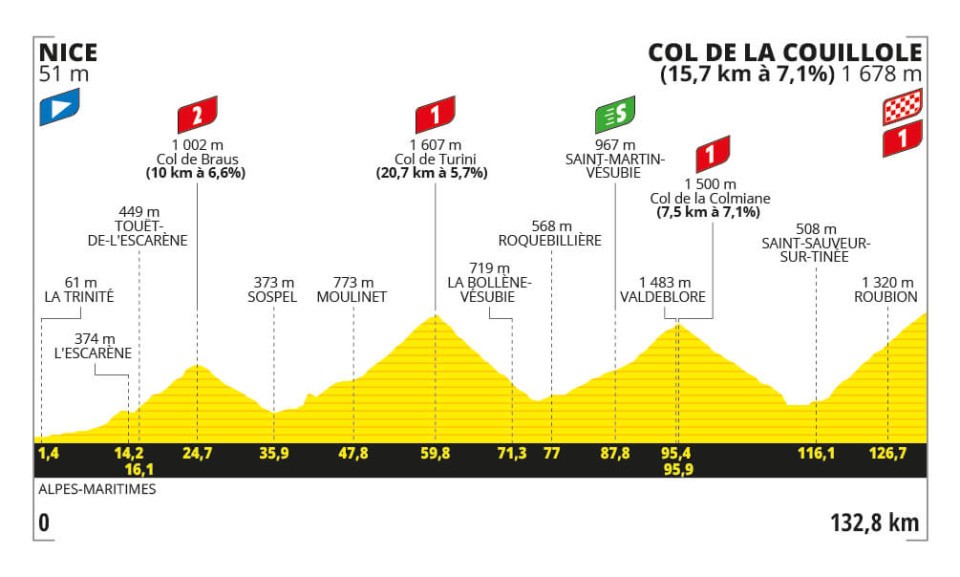
This is the profile of Stage 20 Tour de France 2024.
| Caravan | Fast Schedule | Slow Schedule | |
|---|---|---|---|
| Start Time (départ fictif) | 1135 |
1335 |
1335 |
| Start Time (départ réel) | 1155 |
1355 |
1355 |
| Intermediate Sprint Saint-Martin-Vésubie | 1426 |
1611 |
1628 |
| Col de la Colmiane Climb | 1439 |
1623 |
1642 |
| Finish Line (132.8km) | 1543 |
1718 |
1744 |
This is a video of the route.
Stage 7 of Paris-Nice 2023 also finished on Col de la Couillole.
I am assuming it will be hot weather when Stage 20 is raced in July 2024, and the food and drink to accompany the stage will have to be light and refreshing.
Luckily, salade niçoise is perfectly adapted to hot weather. It includes lettuce, tomatoes, potatoes, tuna fish and soft-boiled eggs. Mmm, very nice.
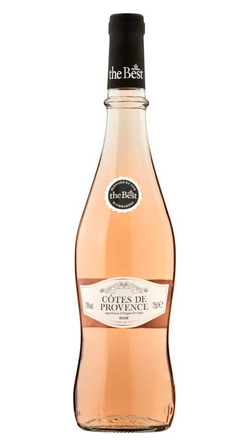
A chilled glass of Côtes de Provence rosé will go perfectly with your salad.
Buy a bottle of Côtes de Provence rosé wine on Amazon (affiliate link).
The stage starts in Nice.
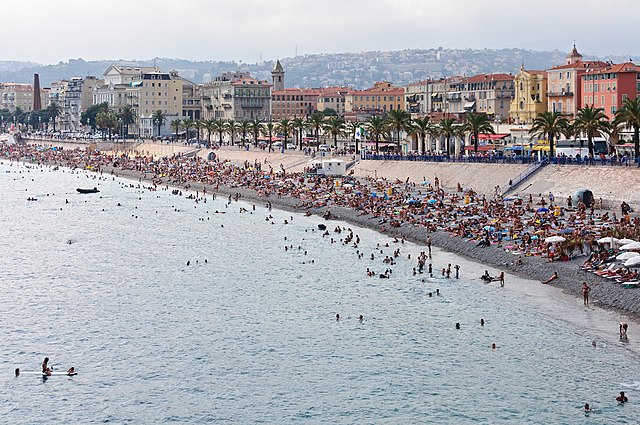
Nice is a major city of around 340,000 people on the Mediterranean coast of France.
This is what one guidebook said about it a few years ago: 'It's a pickpocket's paradise, the traffic is a nightmare, miniature poodles appear to be mandatory, phones are always vandalised, and the beach isn't sand. And yet Nice still manages to be delightful'.
That was in the days when we used paperback guidebooks, and payphones were important, but it's still relevant today. Nice is known as 'Nice la Belle'.
It gets its name from the Greeks, who were the first people to found a colony here, around 600BC. They called it Nikaia, after Nike the goddess of victory.
The Romans took over from the Greeks in 154BC.
Nice was ruled by the House of Savoy from 1388 to 1860. Tobias Smollet visited in 1763.
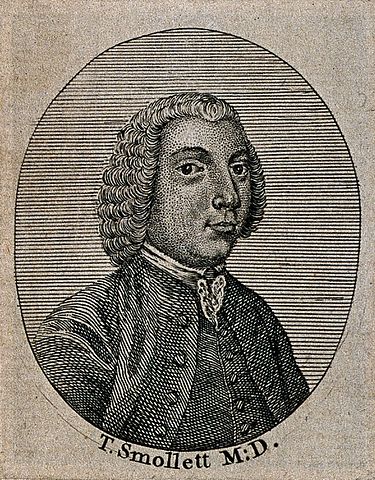
Tobias Smollett recounted his time in Nice in Travels Through France and Italy.
'When I stand upon the rampart, and look round me, I can scarce help thinking myself enchanted. The small extent of country which I see is all cultivated like a garden. Indeed, the plain presents nothing but gardens, full of green trees, loaded with oranges, lemons, citrons and bergamots, which make a delightful appearance. If you examine them more nearly, you will find plantations of green pease ready to gather; all sorts of sallading, and pot-herbs, in perfection; and plats of roses, carnations, ranunculas, anemonies and daffodils, blowing in full glory with such beauty, vigour and perfume as no flower in England ever exhibited.'
When Nice became part of France in 1860, it really began to develop.
It was the first European city to have a completely tourist-based economy, and between 1860 and 1911 it was the fastest-growing city in Europe.
Queen Victoria went to Nice for the mild Winters, and other English aristocrats followed. Soon it became popular with other European royal families including the Russians.
A railway was built at the end of the 1850s, and the coastal road was extended from Nice to Monaco in 1864. Around the same time, Nice's Opera House was built.
Place Masséna and Avenue Jean Médécin are at the heart of the new town and shopping district.
Masséna was one of Napoléon's generals, and Jean Médécin was a long-serving Mayor of Nice. (Médécin's son Jacques was also Mayor of Nice, but fled to Uruguay in 1990 when he came under suspicion of corrupion; he was extradited, convicted and jailed).
Place Masséna is the largest public square in Nice; the department store Galeries Lafayette is there.
The Promenade des Anglais was built in the 1820s with funds from English residents, and is the place to stroll and admire the Baie des Anges.
The Old Town is an area in the shape of an isoceles triangle under the Château, with narrow streets, small squares, and a Baroque chapel and Cathedral. It hosts a flower market and a fish market.
The Château is a park on a hill overlooking the sea. It is named after a castle built in the 1100s, but destroyed by Louis XIV in 1706. Just the Tour Bellanda remains.
At noon every day a cannon is fired from the Château. Sir Thomas Coventry introduced the practice because he was frustrated by irregular mealtimes.
Nice Carnival features floats with flowers and fruits, and has taken place since 1294.
The riders set off from Place Masséna (départ fictif).
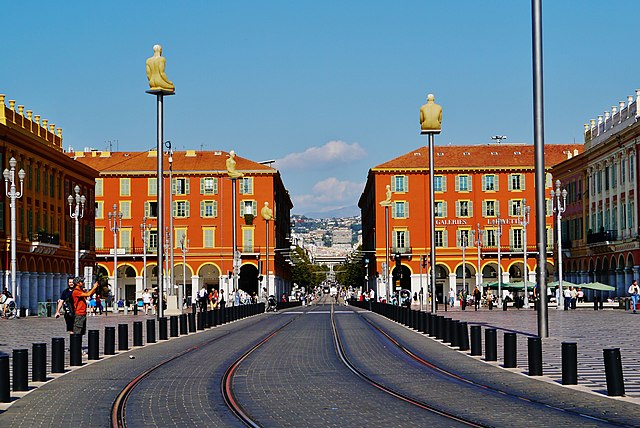
Of course tram tracks and bicycles don't mix well, so presumably the race organisers will put a lot of Polyfilla in them to prevent any accidents.
The neutralised section follows le Paillon upstream.
The départ réel is at L'Ariane-La Trinité a little inland from Nice. The race begins on the D2204, following le Paillon to Cantaron, the continuing uphill to L'Escarène.
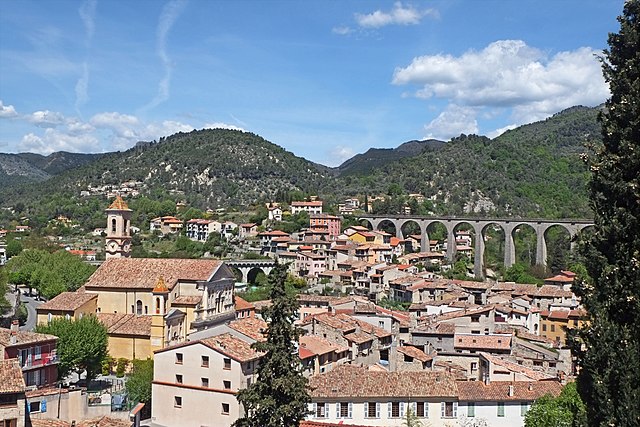
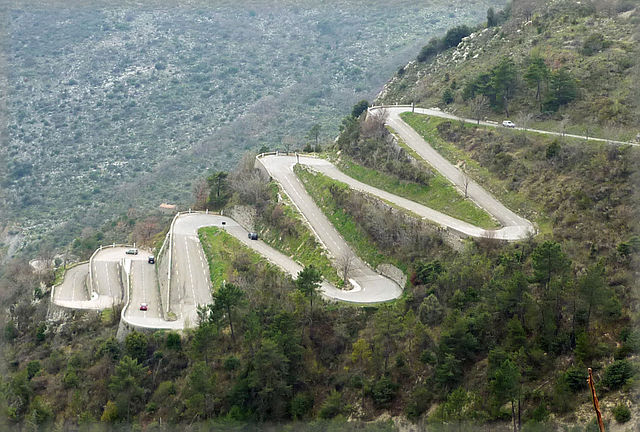
The riders climb from L'Escarène via Touët-de-l'Escarène to the Col de Braus. There are lots of hairpin bends.
On Climbfinder, Marcoj86 says:
'Lovely climb. Close to the hustle and bustle of he coast, but delightfully quiet in the mountains.
The climb has some tricky kilometres, interspersed with some better running sections. Highlight is the passage with the hairpin bends.
The kilometre signs are also very handy and help to classify the climb properly'.
The climb is 10km at an average 6.6% to a height of 1,002m after 24.7km raced.
The descent is via the Col Saint-Jean to Sospel, on the Bévéra river. Sospel is a town that will certainly be very nice when it's finished.
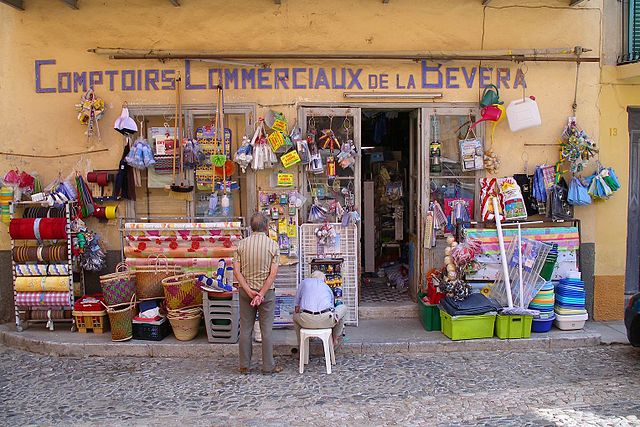
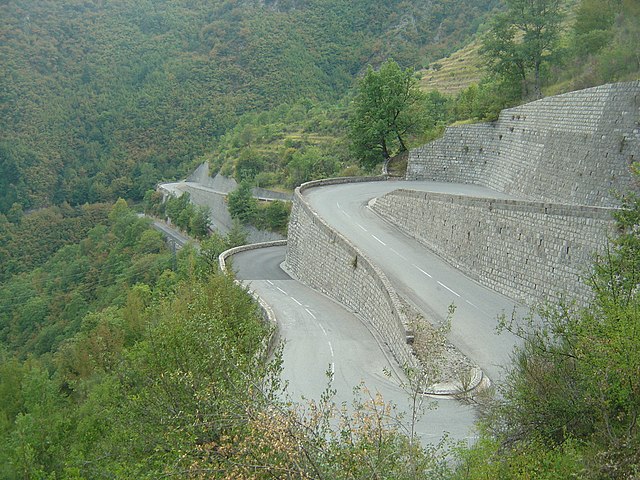
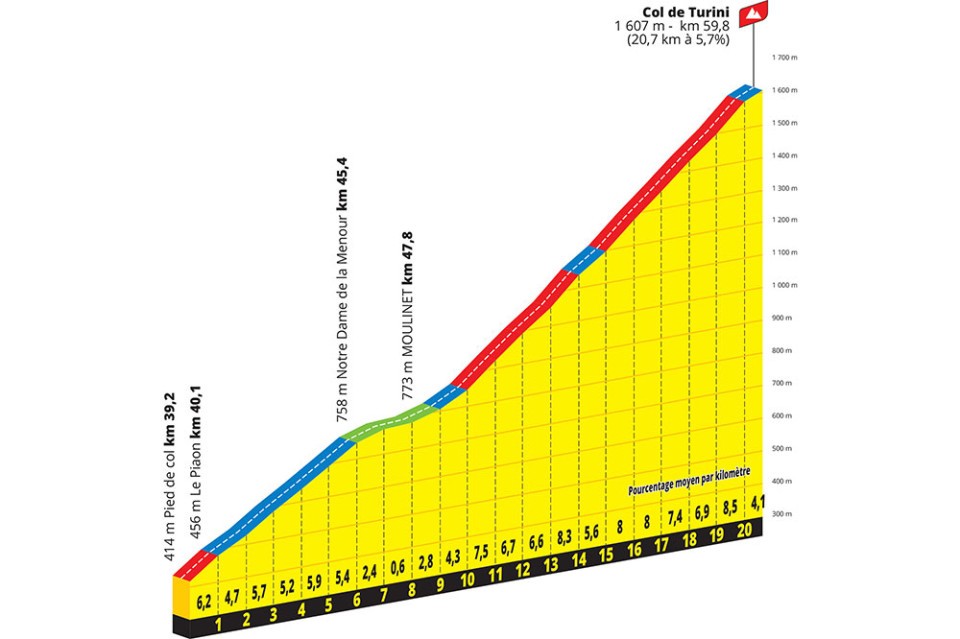
Next the riders climb via Moulinet to the Col de Turini. There are tight hairpin bends along the way.
The ascent of the Col de Turini is 20.7km at an average 5.7% to a height of 1,607m after 59.8km raced.
There are more hairpins on the descent to La Bollène-Vésubie.
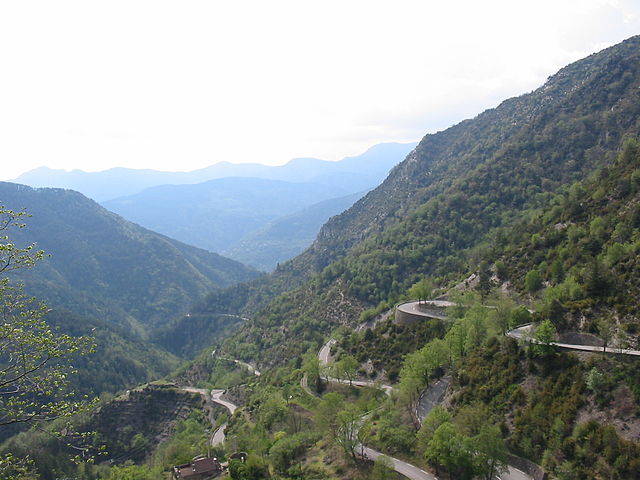
The river in this valley is la Vésubie, and the parcours follows it upstream to Roquebillière and Saint-Martin-Vésubie - where the intermediate sprint takes place.
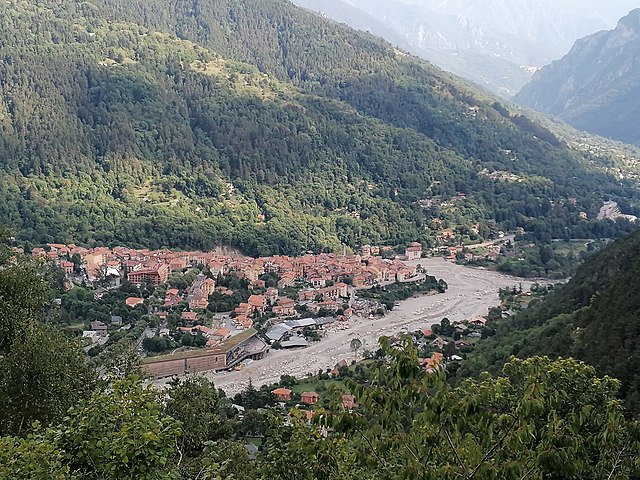
Saint-Martin-Vésubie is known for its role in providing a safe haven for Jews during World War II, under occupation by the Italian 4th Army from November 1942.
After the Italian Armistice in September 1943, Jews in Saint-Martin were arrested and transported to Auschwitz. Those who walked over the mountains to Italy suffered the same fate.
A gendarmerie commander took in a one-year-old child and presented him as his own, and another officer took in the boy's five-year-old sister. So it was that those two children were saved from the Gestapo.
Saint-Martin was damaged by Storm Alex in October 2020.
The intermediate sprint is here after 87.8km raced. Any sprinters wanting to score points will have to make it over two major climbs first, but of course the green jersey competition may be sewn up by this point.
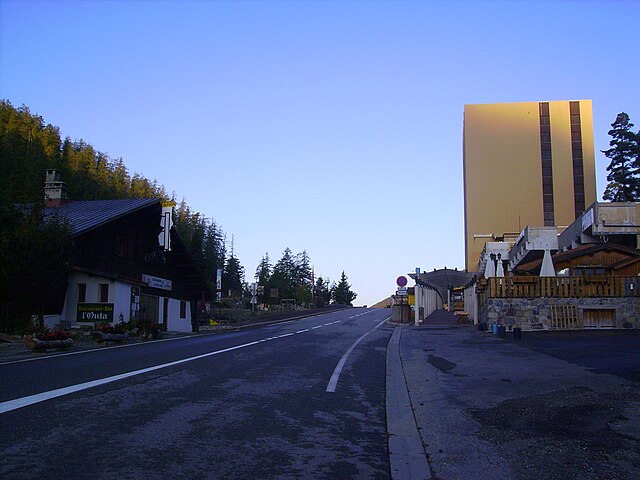
The next climb begins soon after Saint-Martin, and it is the Col de la Colmiane (shown on maps as the Col Saint-Martin).
It's 7.5km at an average 7.1%, to a height of 1,500m after 95.9km raced.
The ski resort of Colmiane has a zip wire that's 2,663m long, which you do head first, arms back.
A long descent by bike, not zip wire, follows for the Tour de France participants, some of it by the river Tinée. It brings the riders to Saint-Sauveur-sur-Tinée.
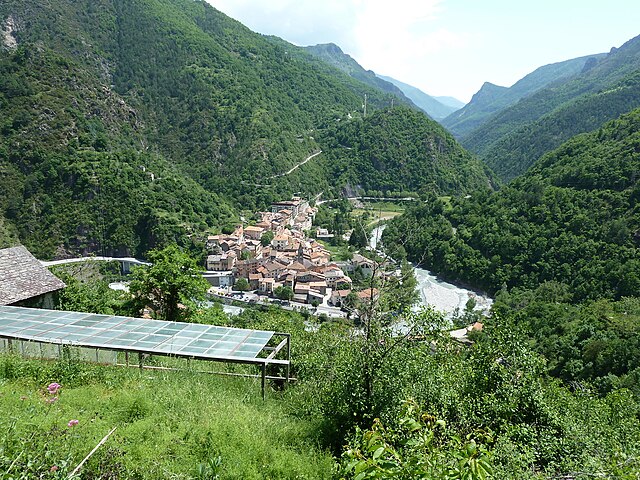
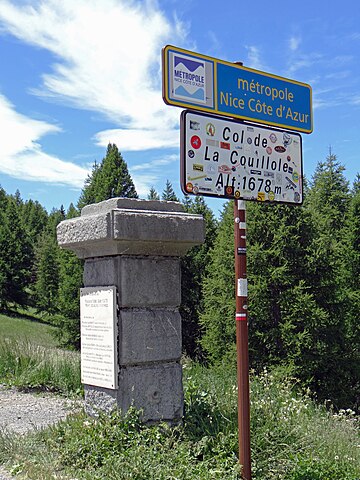
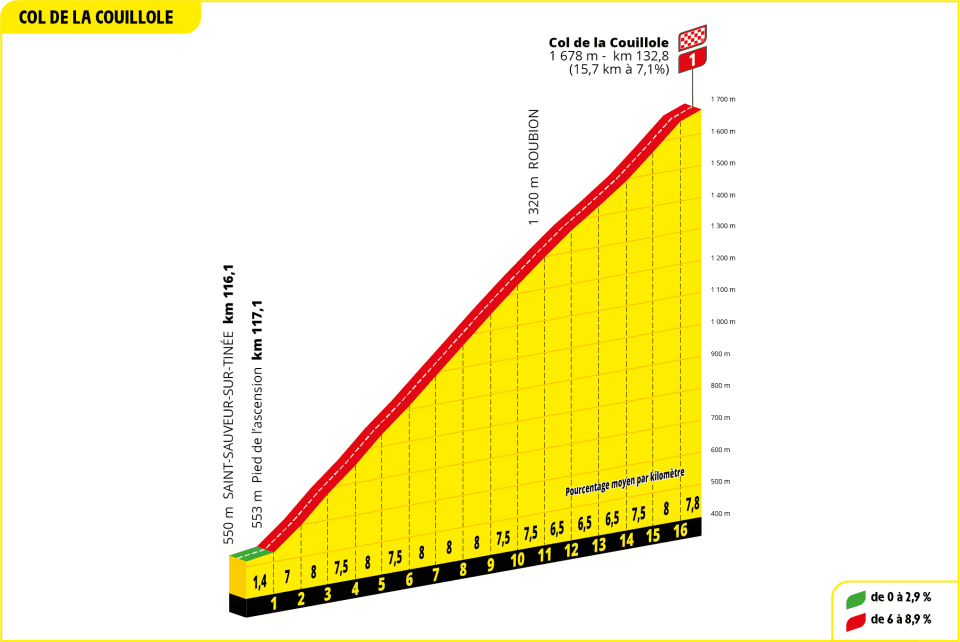
Now the final climb begins, to the Col de la Couillole.
On Climbfinder, Martino says:
'What a fantastic green gorge. From a landscape point of view, it is one of the highlights of the south of France.
Fortunately, it is never steeper than 8% so you can look around and enjoy it, but it is long. And continuous!
On the col you have a water pump with ice cold water. In my opinion, it's worth making a detour to climb this col'..
It's 15.7km at an average 7.1%, and the height at the top is 1,678m.

How to Write a Kindle Ebook is a step by step guide to writing and publishing an ebook on Amazon.
It takes you through the process of writing and formatting it using Microsoft Word, then uploading it to Kindle Direct Publishing and selling it on Amazon.
There's advice and guidance at every stage, with examples including screenshots, and tips on how to overcome practical problems you're likely to encounter.
How to Write a Kindle Ebook will be your reliable and trusted companion as you write and publish your own book.
'I find this a really helpful and informative guide to e-book writing and recommend to others' - reviewer on Amazon.
Buy the ebook or the paperback on Amazon.
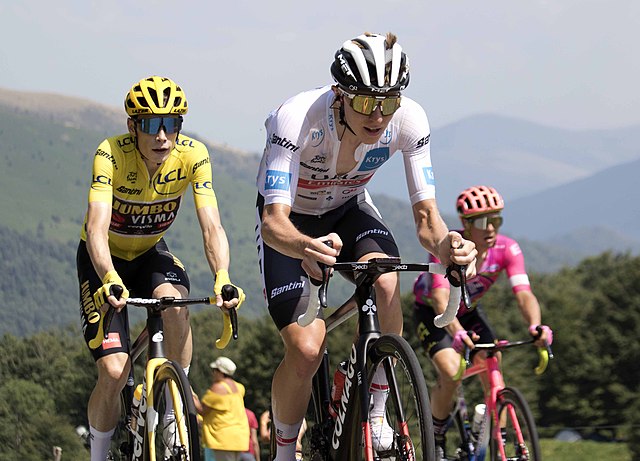
Tadej Pogacar, David Gaudu and Jonas Vingegaard battled each other on the Col de la Couillole in Paris-Nice 2023. Pogacar won that day. Could he do so again?
Who do you think will win Stage 20 of the 2024 Tour de France in Nice?

Science in Sport 800ml water bottle, price £2.50 from Amazon at the time of writing (affiliate link).
As an Amazon Associate, I can theoretically earn a small commission from qualifying purchases.
New in 2023, Bike Rides in the Yorkshire Dales is available in colour paperback.
Find out more about Bike Rides in the Yorkshire Dales or buy a copy.
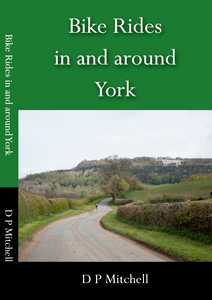
Bike Rides In and Around York features a historical city tour, plus family rides, road rides, and mountain bike rides.
Find out more about Bike Rides In and Around York or buy a copy.
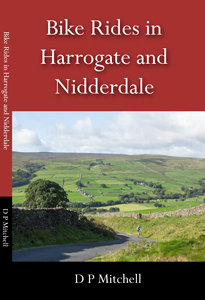
Bike Rides in Harrogate and Nidderdale is a book of family, mountain and road bike rides.
Find out more about Bike Rides in Harrogate and Nidderdale or buy a copy.
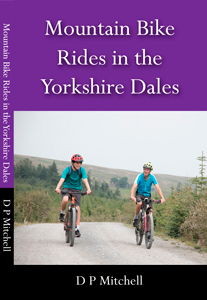
Find out more about Mountain Bike Rides in the Yorkshire Dales.
Buy Mountain Bike Rides in the Yorkshire Dales at £8 + P&P.
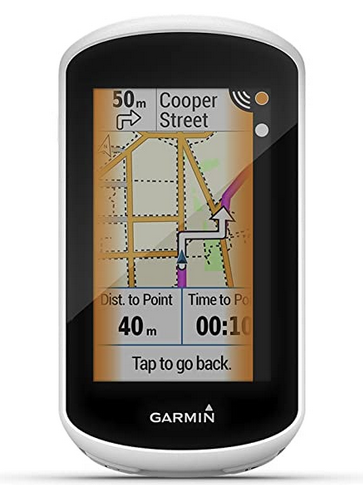
Garmin Edge Explore, £197.99 at the time of writing.
Garmin Edge Explore on Amazon (affiliate link).
Faster by Michael Hutchinson on Amazon. (affiliate link).


