Cycling in Yorkshire & Beyond

Cycling in Yorkshire & Beyond
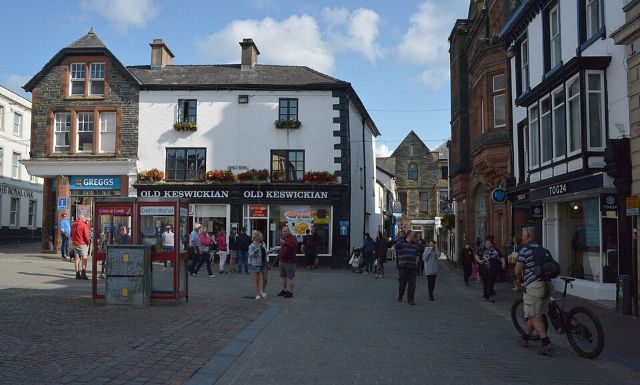
Keswick is a market town and holiday destination at the north end of Derwent Water. Its population is around 5,000.
Keswick's name might be a mixture of Old English and Viking, and could mean 'farm where cheese is made'.
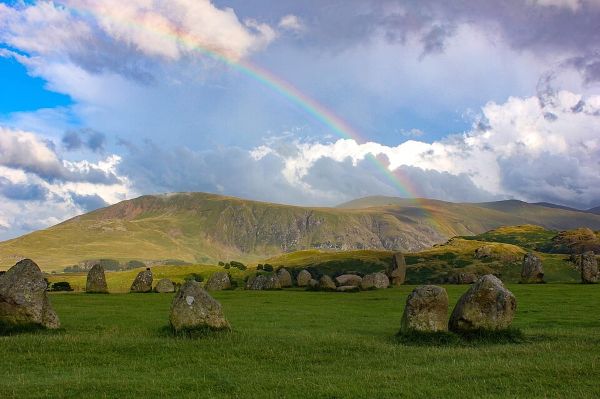
Immediately east of Keswick at Castlerigg is a stone circle from the Neolithic period, around 3000BC. It may have been a trading place for axes.
A Roman camp has been found near the stone circle.
There were Vikings in the area, and they probably introduced the Herdwick sheep between the 900s and 1100s.
A church was founded at Keswick around 1181. At this time, the land here belonged to Furness Abbey and Fountains Abbey, and was used for sheep farming.
Keswick was granted a charter to hold a market by Edward 1 in 1276, where sheep and wool were traded. The market has been held without interruption from 1276 to the present day.
In the 1500s, copper began to be mined around Keswick by immigrant expert copper miners from Germany.
Graphite (sometimes called plumbago, not to be confused with lumbago) was mined too, and from the second half of the 1700s it was used to make pencils. (The pencil factory moved from Keswick to Workington in 2008).
Slate was mined at Honister from 1643.
From the 1700s, the Lake Poets' descriptions of the area (Thomas Gray, Samuel Taylor Coleridge, Robert Southey and William Wordsworth) attracted tourists.
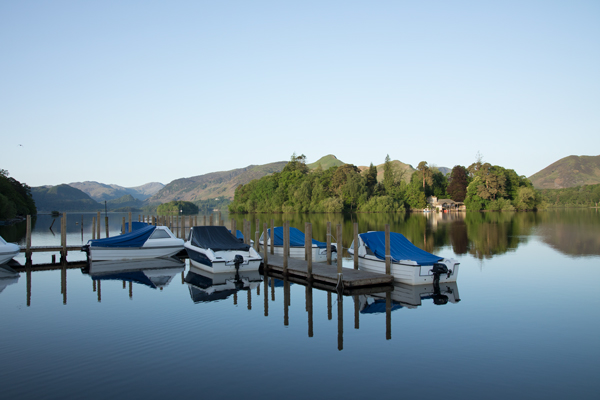
Keswick's biggest attractions are the nearby fells, such as Skiddaw, Grisedale Pike and Helvellyn; and Derwent Water for boat trips and water sports.
It is home to the Theatre by the Lake.
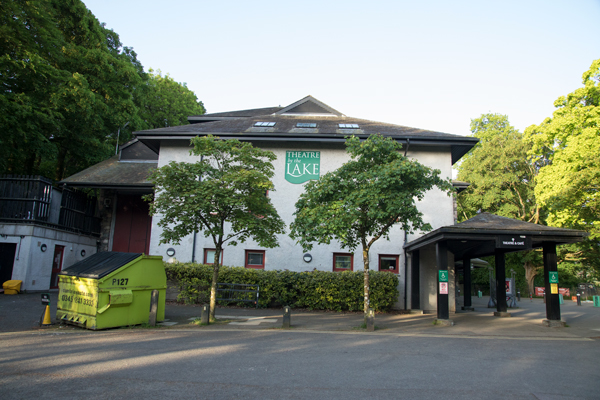
The theatre bills itself as being in a beautiful lakeside setting. One Google review says 'beautiful little theatre, an easy walk from the town...everyone is extremely friendly, there is a nice bar and the seats were comfortable with leg room...'
The Moot Hall is in the Market Square.
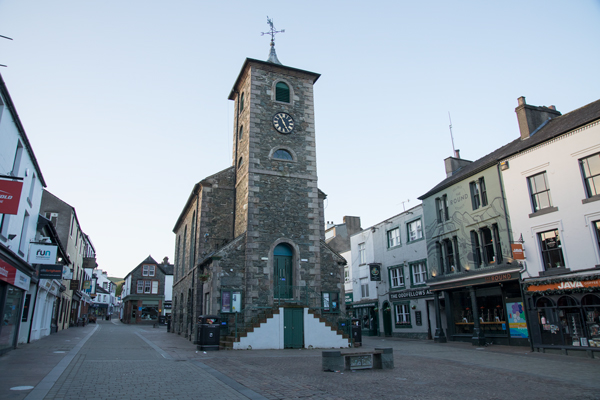
It was a Medieval courthouse, but was converted into a storehouse for copper in the 1500s. Later, it became a market hall.
It ended up in the possession of Greenwich Hospital in the 1800s, and it was the hospital that built the current structure. Later in the 1800s, the hall was used as a museum.
More recently it has been a tourist information office, but that has closed in 2026, and it's going to become a café.
Fell-running events tend to start at the Moot Hall, and Stage 2 of the Tour de France 2027 will start there.
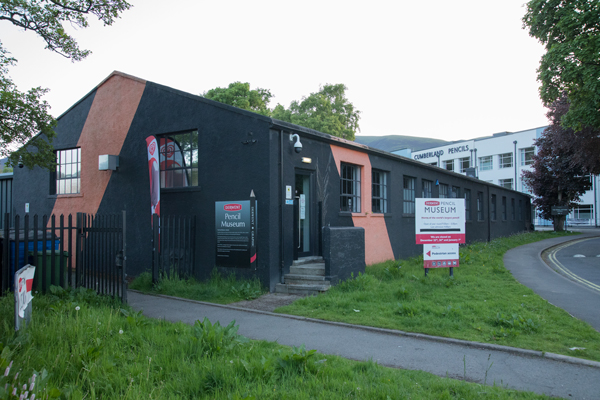
Visitor attractions in Keswick include the Pencil Museum, the Puzzling Place, and climbing wall.
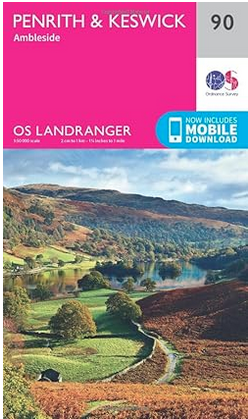
Keswick is on the 1:50,000 OS Landranger map number 90 Penrith & Keswick.
OS Landranger 90 on Amazon (affiliate link).
As an Amazon associate I earn from qualifying purchases.

Bike Rides in the Yorkshire Dales is available in colour paperback.
Find out more about Bike Rides in the Yorkshire Dales or buy a copy.
Bike Rides In and Around York features a historical city tour, plus family rides, road rides, and mountain bike rides.
Find out more about Bike Rides In and Around York or buy a copy.
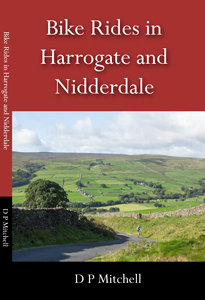
Bike Rides in Harrogate and Nidderdale is a book of family, mountain and road bike rides.
Find out more about Bike Rides in Harrogate and Nidderdale or buy a copy.

