Cycling in Yorkshire

Cycling in Yorkshire
Updated 7th March 2023
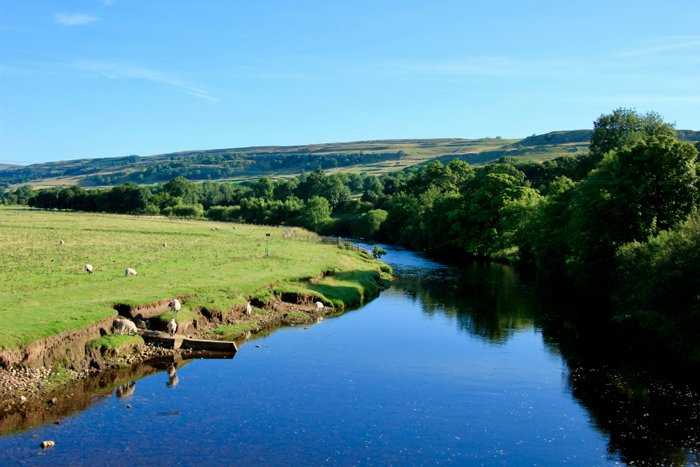
This circular road cycling route starts in Grassington, and heads north up Wharfedale then Littondale to Halton Gill. Next comes the climbing, up to Malham Tarn. The return to Grassington is via Malham, Kirkby Malham, Airton, Hetton, and Cracoe.
Starting and finishing at the Yorkshire Dales National Park car park in Grassington, it's 38 miles. The hills mean that it's worth rather more than that in terms of time and energy expended.
This ride sticks to quiet roads for almost all of the route. There are lanes lined with dry stone walls, open fells with great views on a clear day, and villages of limestone-built houses typical of the Yorkshire Dales.
Distance: 38 miles or
61.5 kilometres
Time: 3-4 hours
This is a Google map of the route from, and back to, the National Park car park in Grassington:
There's a Plotaroute map for this Grassington loop; you can download a navigation file from there.
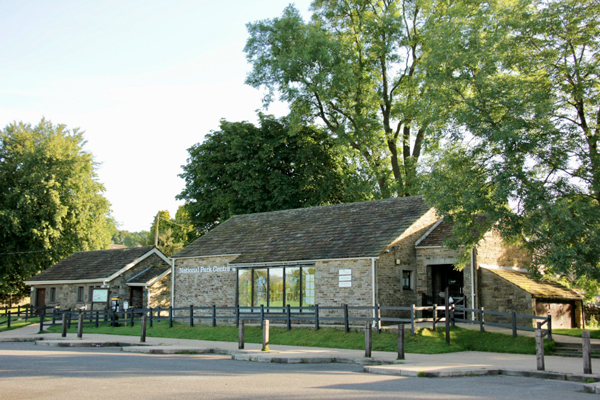
The easiest place to park is in the large car park at the Yorkshire Dales National Park Centre on the edge of Grassington. If you arrive early, there's no problem finding a space even on a sunny summer weekend. The charge is around £5, which I find painful but is probably fine for normal people. There are loos (also paying).
Turn left out of the car park, and right on Grass Wood Lane, which is immediately after the right turn onto Main Street. If you reach the bridge over the river Wharfe, you've missed the turn.
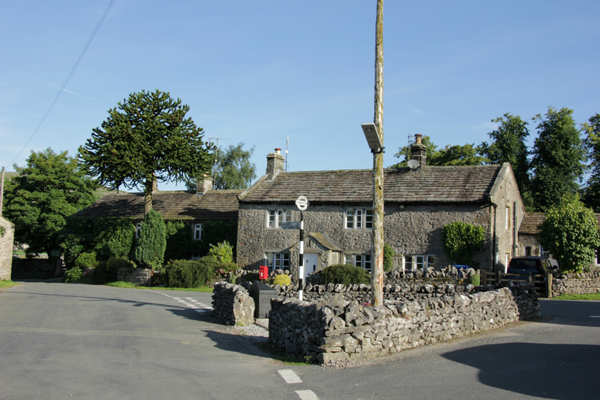
On Grass Wood Lane, the river Wharfe is to your left, and you pass Grass Wood on your right. At Conistone, turn left to cross the Wharfe, then right on the B6160. Kilnsey Crag towers over the road to the left.
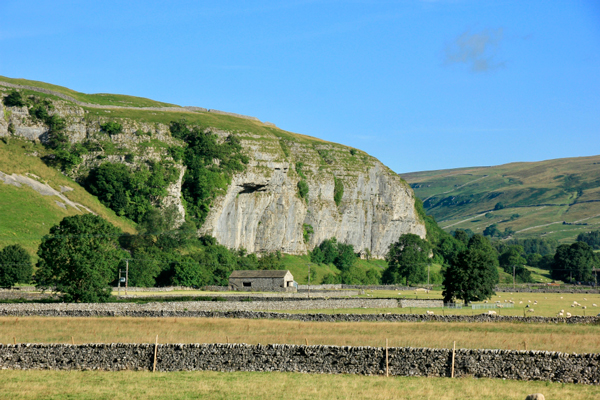
After a short distance on the B6160, you could take the first left to Arncliffe. I prefer to cross the river Skirfare first, and take the second left. This is a narrower and quieter road. It runs parallel to the first, on the other side of the Skirfare. The valley is called Littondale.
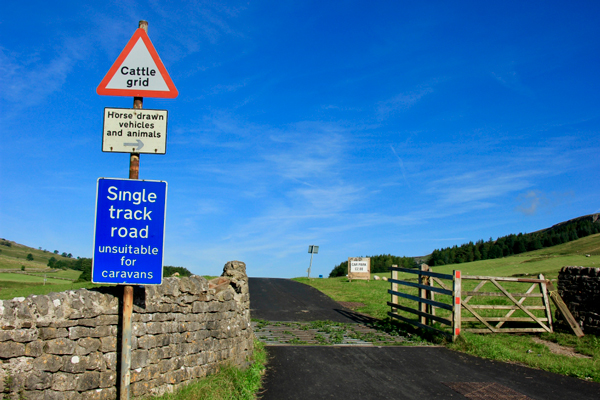
The road takes you to the hamlet of Hawkswick, then to the edge of Arncliffe, where you keep on going up Littondale to Litton.
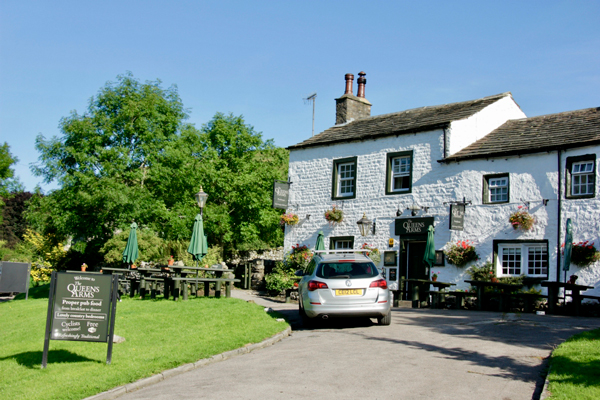
Continue to the hamlet at the head of Littondale, Halton Gill, and turn left to cross the Skirfare.
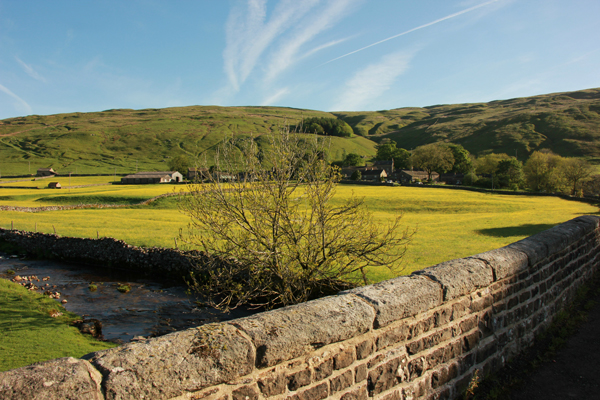
A 16% gradient sign is the big clue that the climbing starts here.
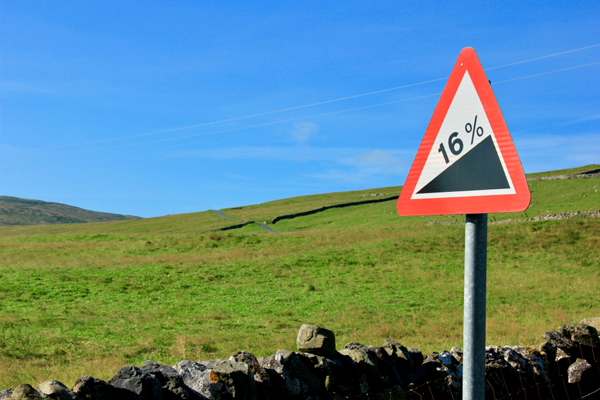
The road is steep at first, and climbs between Darnbrook Fell to the left and Plover Hill to the right. After the initial ramp up, it's a rolling road. There's a view of Pen-y-Ghent Gill and Pen-y-Ghent House to the left of the road.
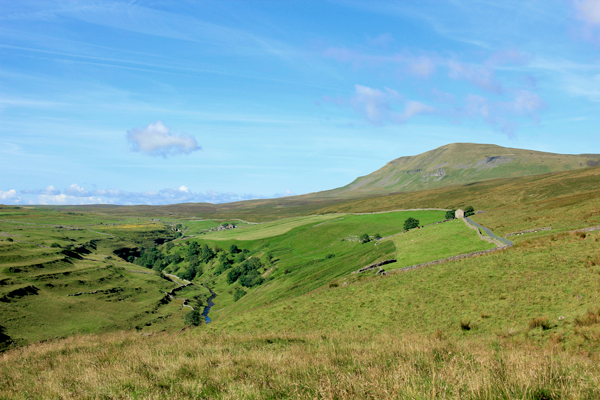
The next hill to the left is Fountains Fell, and the distinctive shape of Pen-y-Ghent is to the right.
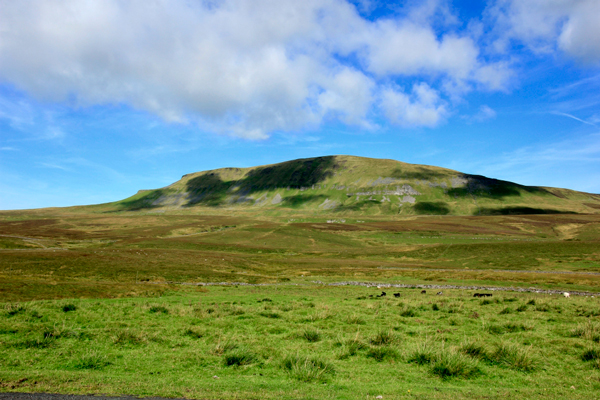
The highest point you reach is 436m, then there's some downhill. Good sight lines mean that you can go reasonably fast. The left turn on Henside Road is signed 'Malham 6'. The road drops down to Tongue Gill, then rears sharply up again. I would say this is the steepest section of the whole ride, and for me it's 'blimey I wish I had another gear' territory, but luckily it doesn't last long.
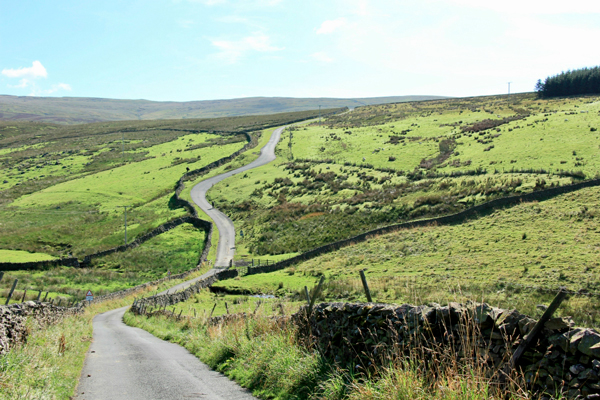
Go straight on at the junction with the road up from Settle. Soon, there are views of Malham Tarn.
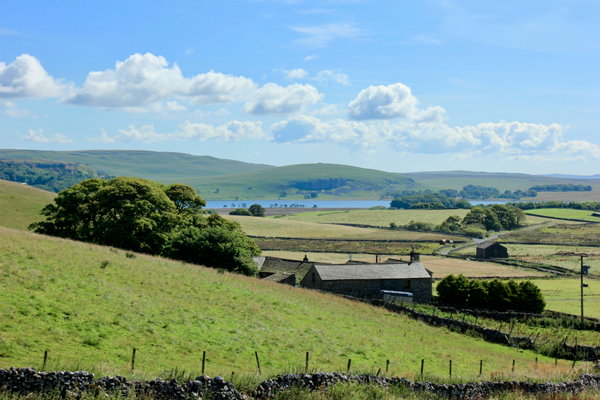
There's a right fork, which leads to a crossroads at Streets. At Streets, bear right on Cove Road, which is gently downhill at first. Then, there's a 14% gradient sign, followed by a steep descent to Malham.
(Note: the Plotaroute route is slightly different. From Streets, I've routed it along the left fork, Henside Road; then it takes Malham Rakes to Malham).
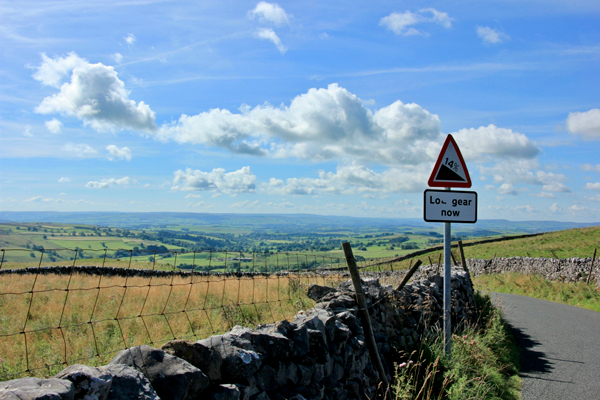
You need good brakes for the Cove Road descent. It would be easy to pick up too much speed and run out of control, especially at one sharp bend to the left, so it's best to keep your speed in check with regular application of the brakes - while trying not to heat up the wheel rims too much. At the bottom of the hill, there's a view of Malham Cove.
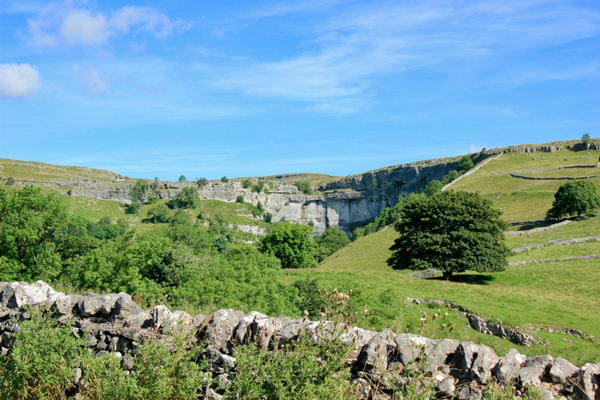
After going through Malham, carry straight on towards Kirkby Malham. As Malham is one of the most popular spots in the Dales, there's often a fair bit of traffic around here.
Beyond Kirkby Malham is Airton. The café at the Farm Shop would be an option for a coffee and cake stop. In Airton, turn left to cross the river Aire. This quiet, rolling road is Sustrans route 68, and goes through Calton, Winterburn, and Hetton. It takes you to Cracoe, and the junction with the B6265.
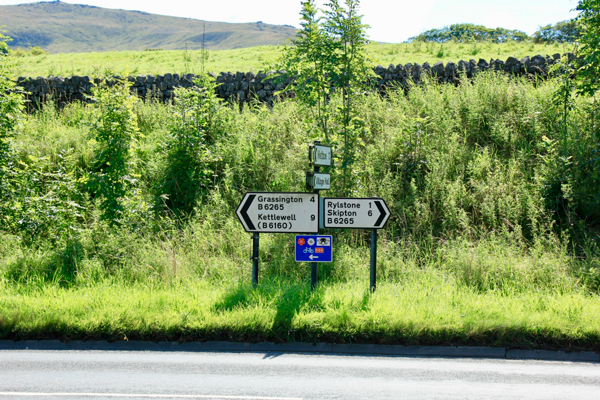
This is the busiest road so far, with cars, motorbikes, vans, and large lorries barrelling along it. You're only on it for a short distance, the length of the village of Cracoe. About 50m before the right turn onto Thorpe Lane, there's a silly bit of 'cycle infrastructure' - see the photo below.
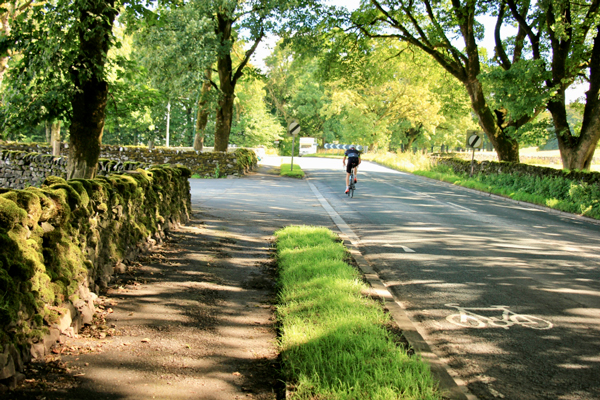
You've already braved the traffic on the B6265 through Cracoe, but a white painted bike sign and arrow suggest that you go along the pavement for a bit. Then when it comes to turning right, you have to cross two lanes of traffic not one - but the 'benefit' is that you don't hold up any motorised traffic if you can't turn right immediately.
Because this 'infrastructure' is so unhelpful, people interpret it however they want. The chap in the photo just ignored it. I saw someone else coming in the other direction using it, but then staying on the pavement all the way through Cracoe. A protected cycle lane, separate from the traffic and pedestrians, would be useful here, but presumably costs too much money.
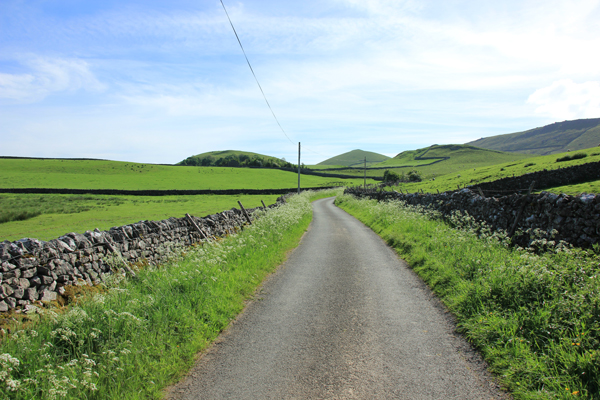
Thorpe Lane is narrow. The surface is a little dodgy in places, but it's acceptable for road tyres. The curious small, rounded hills here are known as the Cracoe Reef Knolls. They are remnants of an ancient coral reef which formed in a shallow sea millions of years ago.
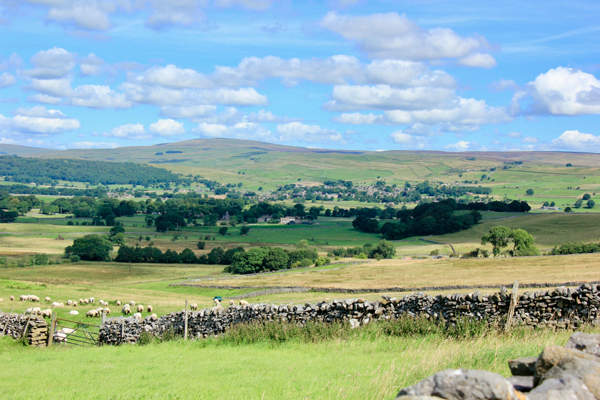
Part-way along Thorpe Lane, you can see Grassington and Grass Wood to the left, so you're within sight of the finish. When you reach Thorpe, you leave route 68, so you have to ignore the blue cycling signs, and turn left.
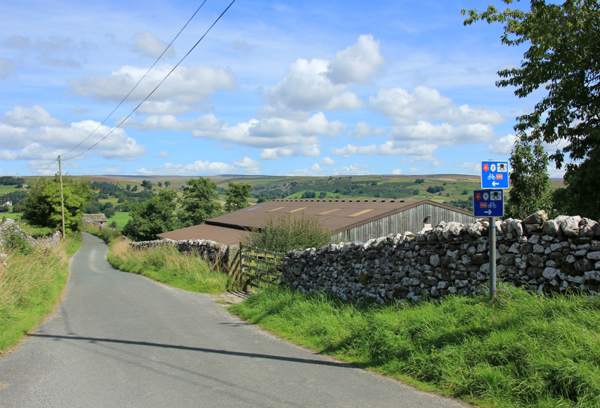
It's a whizz down to the B6160 (usually quiet); turn left onto it, and where Linton is signed to the left, turn right on Church Road, then go left over Ings Beck, and along the Wharfe to the B6265. Turn right, and all that's left is a little climb up from the river to Grassington.
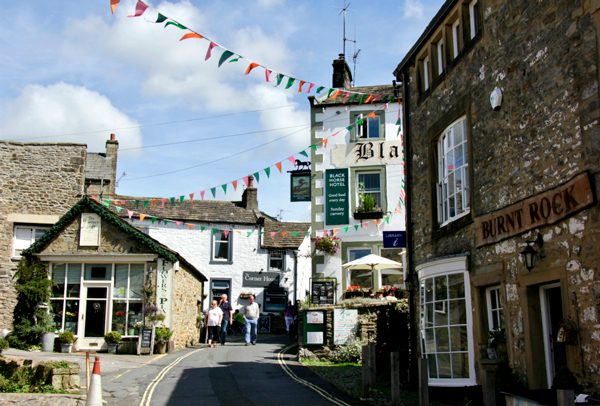
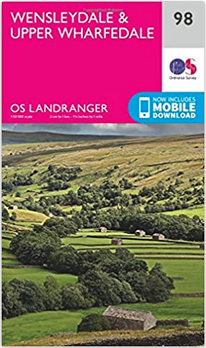
This Grassington road cycling loop is covered by the 1:50,000 OS Landranger map number 98, Wensleydale and Upper Wharfedale, and number 103, Blackburn & Burnley.
Bike Rides In and Around York features a historical city tour, plus family rides, road rides, and mountain bike rides.
"This book is simply a treasure trove not only of great rides but also as a travel guide to the area."
Read more about Bike Rides In and Around York.
Bike Rides in Harrogate and Nidderdale is a book of family, mountain and road bike rides.
"This guide is a wonderful companion whether you ride alone, with family or friends. Don't set out without it."
Read more about Bike Rides in Harrogate and Nidderdale.
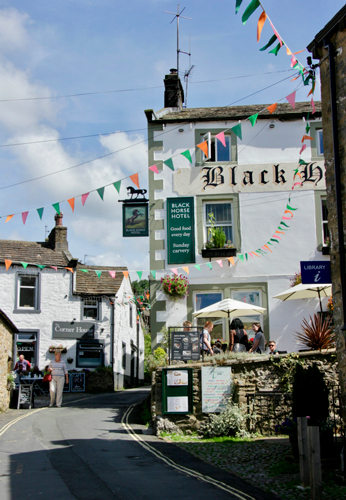
Grassington is the main residential and tourist centre in Upper Wharfedale. It is centred on a small, cobbled square, and has pubs, hotels, restaurants, and the Grassington Folk Museum.
It was granted a charter for a market and fair in 1282, so is technically a market town rather than a village.
When the Yorkshire Dales Railway was built in 1901 to neighbouring Threshfield, Grassington began to receive many visitors. Today, they come by road, to visit attractions in the Yorkshire Dales National Park, including nearby Grass Wood. People also come for the Grassington Festival.
At Linton Falls, close to Grassington, Archimedes Screws generate hydroelectric power.
Malham Tarn is a glacial lake at an altitude of 377m. It is one of only eight upland alkaline lakes in Europe.
The maximum depth of Malham Tarn is 4.4m. There's an inflow and an outflow stream, and it takes about 11 weeks for water to leave the lake after it has entered.
The outflow stream goes underground after leaving Malham Tarn, then another underground stream emerges just beyond Malham Cove. That's Malham Beck, which is the source of the river Aire.
Captive-bred water voles were reintroduced to the tarn in August 2016.
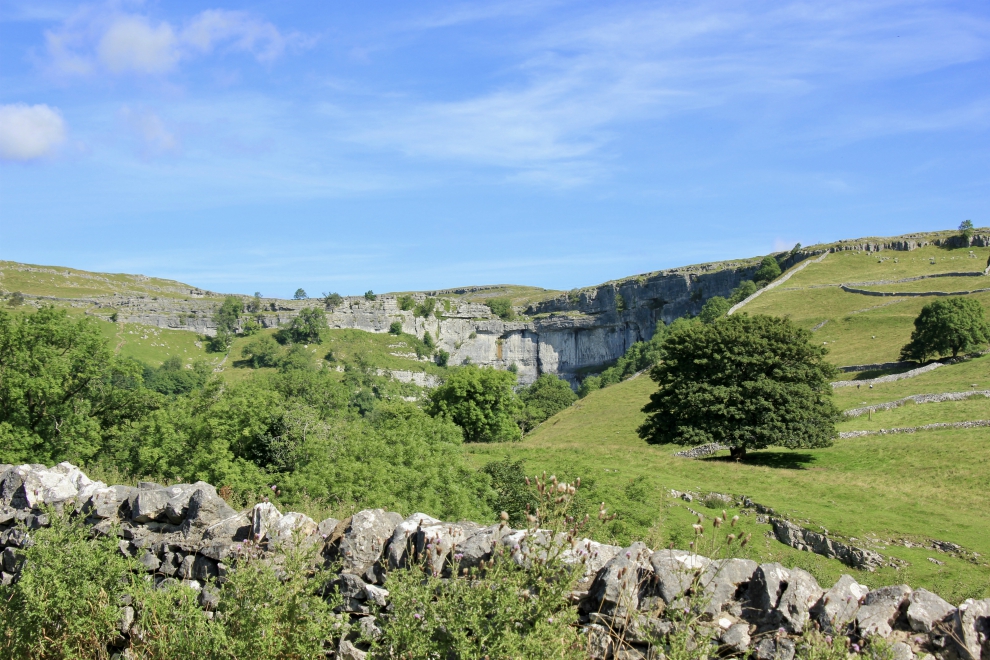
Malham Cove is a large, curved cliff, which was formed by a waterfall carrying meltwater from glaciers at the end of the last Ice Age over 12,000 years ago.
Today, the stream out of Malham Tarn goes underground at Water Sinks, about a mile before the top of the cove; another stream emerges as Malham Beck from a cave at the bottom of the cove - but experiments with dyes have shown that it's not the same stream.
There's a large limestone pavement above the cove. Glaciers scraped away material above the limestone; then corrosive drainage along joints and cracks in the rock produced slabs called clints. The fissures are called grikes.